Five Things We Learned from the Canadian Grand Prix
Montreal once again proved why it is one of the most unpredictable stops on the calendar. Few circuits combine strategy and chaos as closely as the Circuit Gilles Villeneuve. Between bold tyre calls, Safety Cars, and relentless incidents, the Canadian Grand Prix delivered one of the most intense races of the season.
Tom Oldenmenger – A Statement Victory

It was not a dominant win from the front, but one built on precision, patience, and perfect execution.
Tom Oldenmenger claimed his first VFC victory in Montreal – and did so in a way few could have predicted before the race.
Starting from the pit lane alongside Mirco Mancini, Rouven Meschede (standing in for Sven Schubert), Daniel Scott, and both Rookie Monsters drivers, Oldenmenger faced an uphill battle from the outset. The decision to use a sixth engine – and therefore accept a pit lane start – seemed like a compromise.
Instead, it became the foundation of his success.
While the field ahead became entangled in battles and incidents, Oldenmenger drove a clean and controlled race. No unnecessary risks, no wasted movement – just consistent pace and excellent tyre management. His one-stop strategy, which he later described as “almost zero tyre wear,” proved decisive.
As others were forced to pit again in the closing stages, Oldenmenger stayed out. With no further Safety Car to neutralise the race, he converted his track position into a comfortable victory.
The win carries extra weight: with title rival Sven Schubert absent, Oldenmenger now leads the championship by 12 points.
A victory that changes the narrative of the season.
Optiminal Under Scrutiny

While Oldenmenger delivered a composed performance, Optiminal Esports attracted attention for very different reasons.
Both Heiko Kolvenbach and stand-in driver Rouven Meschede displayed an extremely aggressive driving style throughout the race. Multiple collisions, late-braking moves, and high-risk overtakes became a recurring theme.
The reaction in the paddock was immediate. Criticism grew, and some voices even called for penalties to set a clear precedent.
For the reigning Team Champions, it is an unusual situation. Not the result, but the approach is now being questioned.
Razor GP – Pace Returns
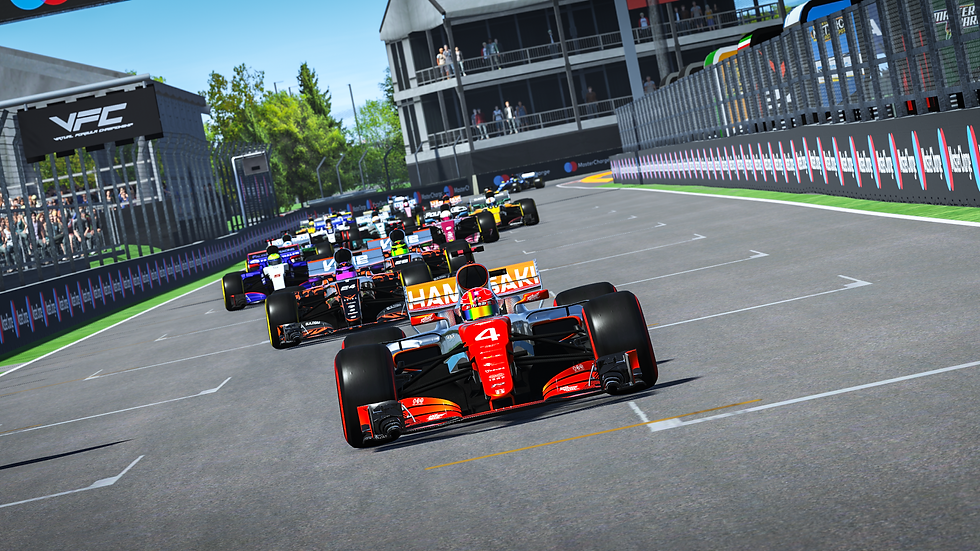
If one team leaves Montreal with momentum, it is Razor GP.
The team introduced a major upgrade package for Canada – and the impact was immediate. In qualifying, they secured a front-row lockout with a clear advantage over the field.
In the race, that pace initially translated into control .Bastian Paisler led the field, with Fabian Walter backing him up.
But Montreal rarely allows a race to unfold cleanly.
The repeated Safety Car phases disrupted Paisler’s strategy entirely. What had looked like a controlled race turned into a tactical setback, and he ultimately finished only 11th – a result that does not reflect his pace.
Walter, however, managed the situation more effectively and finished fourth, securing Razor GP’s best result of the season so far.
The conclusion is clear: The speed is back. Now it needs to be converted into consistent results.
Five Races, Five Winners

The 2026 VFC season is shaping up to be one of the most unpredictable in recent memory.
After five races, we have already seen five different winners. For comparison, the entire previous season produced only six.
This level of variation changes the nature of the championship. There is no single dominant force – instead, multiple drivers are capable of winning on any given weekend.
Looking ahead to Miami, a sixth winner in six races would no longer be a surprise.
Drivers such as Heiko Kolvenbach, Mirco Mancini, and others have already shown the pace – they are simply waiting for the right race to come together.
The title fight is wide open.
Montreal – Chaos, as Expected
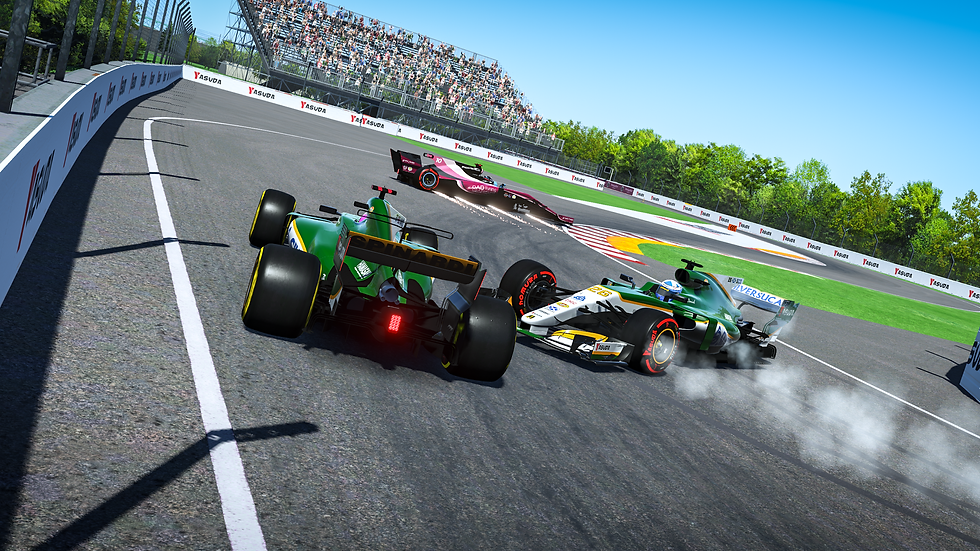
Some circuits produce chaos.Montreal guarantees it.
Four Safety Car periods, countless incidents, and a race that never fully settled defined the event. The Circuit Gilles Villeneuve once again demonstrated how quickly control can turn into disorder.
The list of incidents was extensive: A heavy crash involving Chris Gitsov and Daniel Scott, multiple rollovers – including Fabian Szyrzik, Robin Moelling, and Stefan Schubert – and numerous smaller collisions throughout the field.
One of the most remarkable stories came from Moelling, who managed to recover from his incident and still finish on the podium.
The pit lane added to the chaos. Tight space, overlapping strategies, and repeated neutralisations led to blocked pit boxes and confusion. Alex Woitala was particularly affected and voiced his frustration afterwards.
From a sporting perspective, the driving standards were inconsistent at times. From a spectator’s perspective, however, it was a spectacle.
Next up: Miami. And the expectation is clear – less chaos, more control.


Comments